

If you’ve ever run CPC (cost-per-click) ads, you know the pain:
You pay for every click, whether the buyer purchases or just window-shops and disappears.
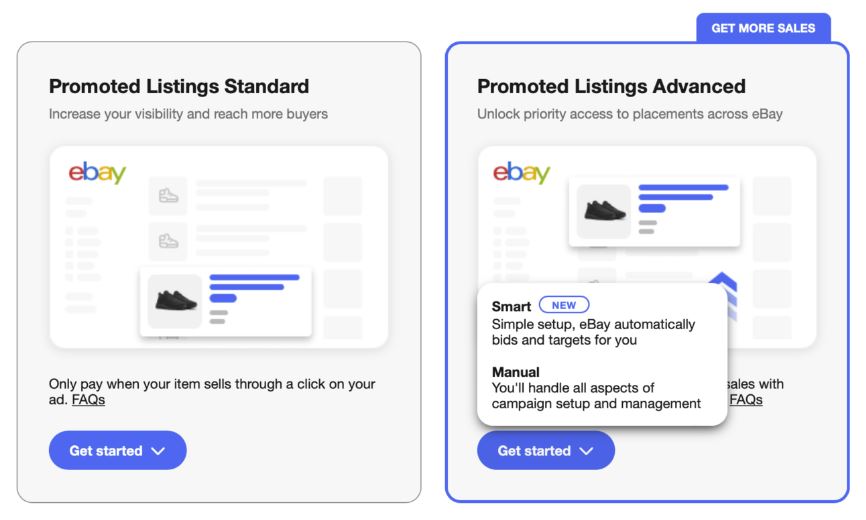
On eBay, Promoted Listings (Standard) flip that model. Instead of paying for traffic, you pay a percentage of the final sale price—only when your item actually sells through the ad. No sale? No ad fee.
For many eBay sellers, that’s a game-changer.
How eBay Promoted Listings Work
Promoted Listings Standard is simple in concept:
- You choose which listings to promote.
- You set an ad rate (a percentage of the item’s sale price, for example 5%).
- eBay boosts your listing’s visibility in search results and other placements.
- If a buyer clicks your promoted listing and buys the item within the attribution window, you pay the agreed % as an ad fee.
So instead of gambling on clicks, you’re effectively saying:
“I’m willing to give eBay X% of this sale in exchange for more visibility and a higher chance of selling.”
Why Promoted Listings Are Better Than CPC (For Most eBay Sellers)
1. You Pay For Results, Not Just Traffic
With CPC, you can:
- Get a hundred clicks
- Pay for all of them
- End up with zero sales
That’s painful, especially in competitive niches or when you’re still testing your listings.
With Promoted Listings:
- You only pay when a sale happens
- The ad cost is automatically tied to successful transactions
- Your marketing risk is dramatically lower
It’s closer to a performance-based model than a “hope-based” one.
2. Easier to Control Profit Margins
Because you’re setting a percentage, it’s much easier to calculate your profit:
- You know your item cost
- You know your shipping, eBay fees, and other expenses
- You decide what % you’re comfortable giving to ads
For example:
- Item sells for $100
- Your total cost (product + shipping + fees) is $70
- You set a 5% ad rate ($5)
Your net = $100 – $70 – $5 = $25 profit
You can adjust the % to fit within your margin, making it much more predictable than CPC where a few expensive clicks can ruin profitability.
3. Lower Risk for New or Small Sellers
If you’re not a big brand with a huge ad budget, CPC can be scary. One bad campaign can burn money quickly.
Promoted Listings are much friendlier to:
- New sellers
- Small stores
- Sellers testing new products
Why?
Because you’re never in a position where you’ve spent $100 on clicks and made $0 in sales. No sale = no ad fee.
4. More Visibility in a Crowded Marketplace
eBay is crowded, and organic visibility alone can be slow. Promoted Listings help your products:
- Appear higher in search results
- Get shown in “Sponsored” positions
- Gain extra exposure in browsing and related product areas
This is especially important if:
- You sell in competitive categories
- Your competitors are already using Promoted Listings
- You need faster sell-through instead of waiting weeks for organic traffic
How the Percentage-Based Model Works in Practice
When you set a promoted listings campaign, you choose:
- Which listings to promote
- Your ad rate %
eBay gives you a suggested range based on competition, but you’re free to go higher or lower.
Higher % = more aggressive bidding for visibility
Lower % = more conservative, but still better than no promotion
Because the fee is charged only when you sell, every promoted sale is trackable and tied to your actual revenue. This makes it easier to think in terms of:
“I’m willing to spend up to X% of each sale to keep my sales volume high.”
Promoted Listings vs CPC: A Quick Comparison
| Aspect | Promoted Listings (Standard) | CPC Ads |
|---|---|---|
| When you pay | Only after a sale | Every click, sale or no sale |
| Budget risk | Lower | Higher |
| Profit margin control | Easier (fixed %) | Harder (varies with clicks) |
| Ideal for | Most eBay sellers, especially small | Large brands, advanced advertisers |
| Setup complexity | Simple | More complex (bids, keywords, etc.) |
For most regular eBay sellers, Promoted Listings Standard is the safer, smarter starting point.
Tips to Make the Most of Promoted Listings
To truly benefit from this model, your listing itself still needs to be strong. Promoted visibility won’t fix a weak listing.
Focus on:
- Great photos – clear, professional, multiple angles
- Strong titles – keywords buyers actually use
- Accurate descriptions – reduce returns and complaints
- Competitive pricing – especially in crowded categories
- Fast handling & good service – boosts feedback and conversion
Then layer Promoted Listings on top to drive more eyes to a listing that already converts decently.
Final Thoughts
eBay Promoted Listings give you something most ad platforms don’t:
- Visibility now
- Payment later – and only if you sell
Instead of burning budget on empty clicks, you tie your advertising cost directly to successful orders at a percentage you choose.
For most eBay sellers—especially those watching every dollar—this model is cleaner, safer, and easier to manage than traditional CPC.
If you’re not using Promoted Listings yet, start testing a small percentage on key products. Once you see how paying only after the sale feels, you may never want to go back to pure CPC again.
Leave a Reply